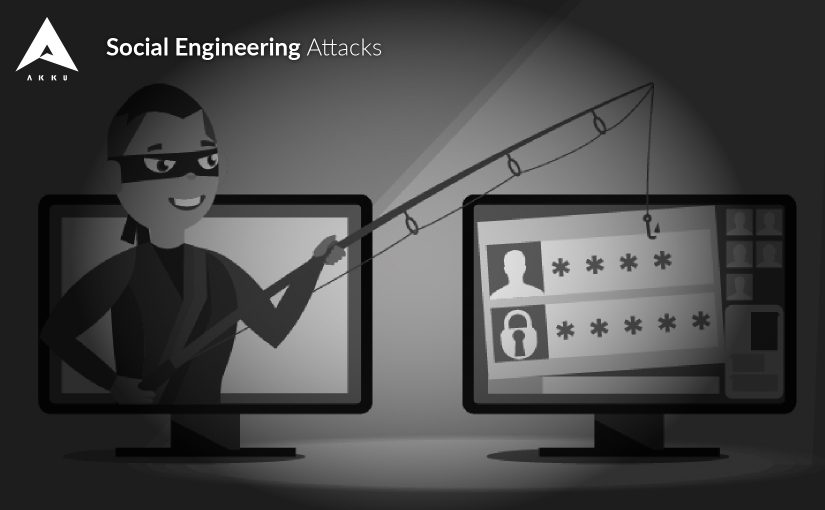
When in action, a social engineering attack could look like an email received from a government organization or your own organization asking your employees to divulge their credentials. The basis of social engineering attacks is to induce fear or urgency in unsuspecting users and employees into handing over sensitive information. Over the years, these attacks have become more sophisticated – even if you open a mail or message from a possible attacker, malware is immediately installed on your system. Continue reading Identity and Access Management for Social Engineering Attacks
Tag: Data Breach
Working Online? Watch out for Identity Theft!
Identity theft is as real as your identity and as dangerous as the one who steals it. It occurs when an unauthorized person or entity uses your personal information to assume your identity and commit fraud and other criminal activities including stealing from you, or from others in your name.
What does an identity thief steal?
Your name, address, credit card or bank account information, and even information that might otherwise seem harmless, such as photographs, information about your family members or your date of birth could be used in harmful ways in the wrong hands.
How does identity theft happen?
Identity thieves are well-organized, tech-savvy, creative and have seemingly innocent online personalities. They can steal information, simply by requesting it from an unassuming person or by using technological attacks to capture millions of records from enterprises. Sometimes, a stolen wallet or a carelessly-thrown receipt or letter can also lead to identity theft.
Here are some of the ways in which an identity theft may take place in your organization:
Data Breaches
A data breach, accidental or malicious, can have a heavy cost on both the organization involved and the individuals whose data is compromised.
Improper security on company-owned devices or devices that have access to your organization’s data is one of the leading causes of data breaches that lead to identity theft.
Phishing
Phishing involves sending deceptive emails with links to malicious websites that may either request or steal your information. If one of your employees is manipulated by such an email and clicks on a link it provides, it can be dangerous to the organization itself.
Even if your organization’s email can manage to keep out such mails from employee inboxes, if your employee has access to their personal email at the workplace, they are at the risk of being compromised.
Public Wi-Fi Connections
One of the problems with allowing your employees to work remotely is the possibility that they may be working from places that offer open or free public wireless internet connectivity. A criminal who also has access to the same network could also be able to observe all of your employee’s activities.
Mishandled Passwords
Carelessness with passwords, whether in terms of the creation of weak passwords or the way they are stored, can make your employees and your organization susceptible to identity theft.
Read our blog on Everything You Need to Know about Secure Passwords to know more about keeping passwords safe.
How can you prevent identity theft?
When it comes to preventing identity theft, the first step to take is to sensitize your employees on the different ways in which it can happen. Studies have proven that employees are the preferred channels that identity thieves use when they target organizations.
From your end, you also need to:
- Set a strong password policy across your enterprise applications, to ensure that your organization is not compromised through your employees’ use of weak passwords
- Use two-factor authentication or multi-factor authentication to enhance the security of applications carrying sensitive data
- Ensure that your DNS filter works effectively to block out malicious websites that your employees may try to access
- Block access to employees’ personal emails at work, so that there a lesser chance of data compromise and data breaches through phishing
- Set up IP-based or device-based restrictions so that unauthorized persons are kept out of your applications when they try to access them from unsafe locations or unrecognized devices
An identity and access management solution (IAM) like Akku can help you take control of all the preventive methods listed above, all in one go.
Get in touch with us through sales@akku.work if you wish to know more about how Akku can help protect your organization from identity theft through identity/access management.

Dedicated servers for unmatched transparency in data privacy
Apart from data security, data privacy represents a major area of concern in IT security today. When it comes to data privacy, all organizations are very particular about where and how their company data is being saved, and who has access to it.
This is also related to one of the major reasons why organizations still hesitate to move their data to the cloud – “who else has access to my data if I move to cloud?” Even though almost every IaaS and PaaS provider tries to build confidence in their clients through certifications by authorized agencies, many enterprises are still not convinced. The reason is that there are still areas that lack transparency, where details on their data privacy are not clearly explained and conveyed to them.
To make things more complicated, in many cases, “backdoors” are being legalized by governments!
An effective identity and access management (IAM) solution plays a major role in data privacy and security and could go a long way in addressing the concerns that many businesses have. However, when it comes to IAM, most of the tools do not provide a dedicated server for each of their clients. While it is a fact that a dedicated server tends to cost more when it comes to pricing to the service provider, it is definitely the best way to provide 100% visibility to the client on their company data.
When a dedicated server is assigned to a client, it is possible to share server access between the client and service provider – the service provider cannot login without the client’s knowledge, and the client cannot login without the service provider’s knowledge. This may present some practical difficulties, but it is the only way to give a client 100% confidence that their data is truly under their control.
While it is true that all models have their own advantages and disadvantages, the use of a dedicated server for each client is clearly the best solution in terms of visibility and transparency, with minimal practical difficulty.

Cloud Security Solutions – Why do you need them?
Migration to the cloud is no longer an emerging trend. It is now a well-established method of running the operations of a business. With the cloud, you can manage data and applications in a secure environment and ensure that your users face virtually no latency while using your applications. But although the cloud comes with a basic framework for security, it still has its inherent security risks which need highly specific cloud security solutions to reliably protect your data.
To understand the need for implementing an effective cloud security solution, a deeper understanding of what causes and constitutes a cloud security threat is important.